
Vetiver Grass
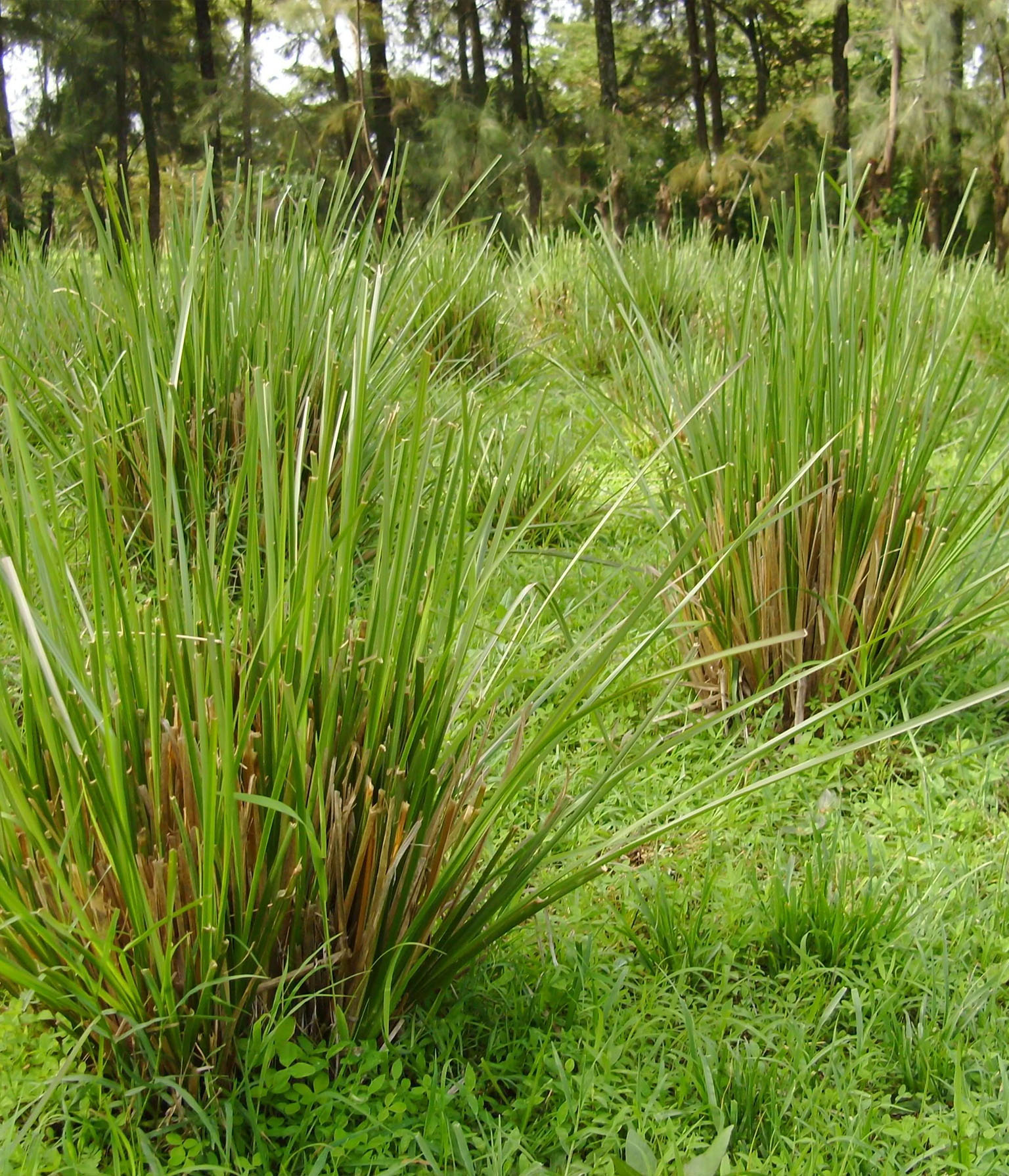
Vetiver, formerly classified as Vetiveria zizanioides and now reclassified as Chrysopogon zizanioides, is a fast-growing, perennial grass known for its robust and deep root system. In tropical environments, it has demonstrated a remarkable lifespan of up to 100 years.
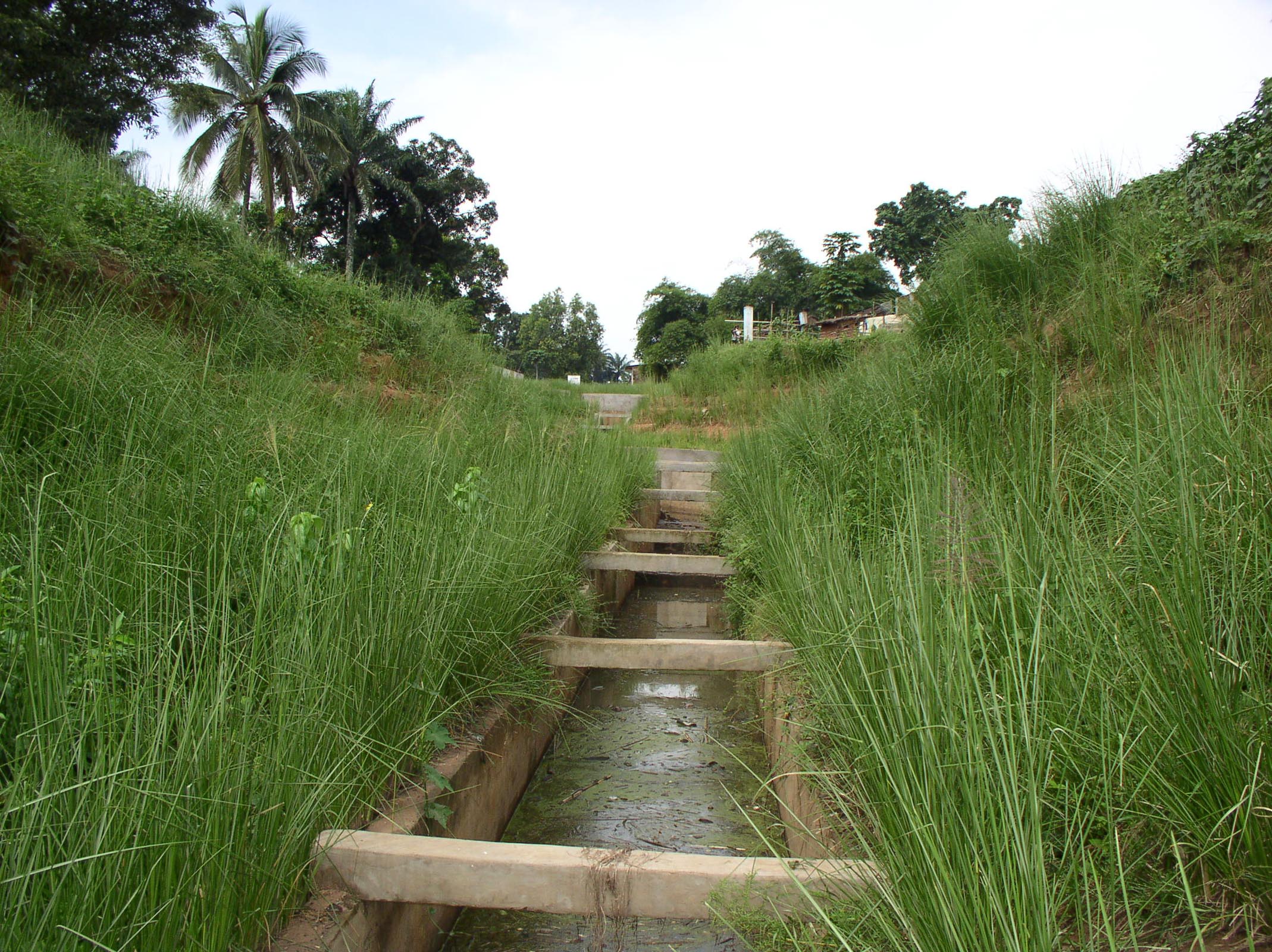
Unlike many grasses, vetiver does not produce lateral roots, stolons, or rhizomes, meaning it cannot spread horizontally or propagate invasively. It also does not produce fertile seeds, which further ensures that it does not naturalize or become invasive. When planted in close rows, vetiver forms dense, narrow hedges that are highly effective for erosion control and slope stabilization.
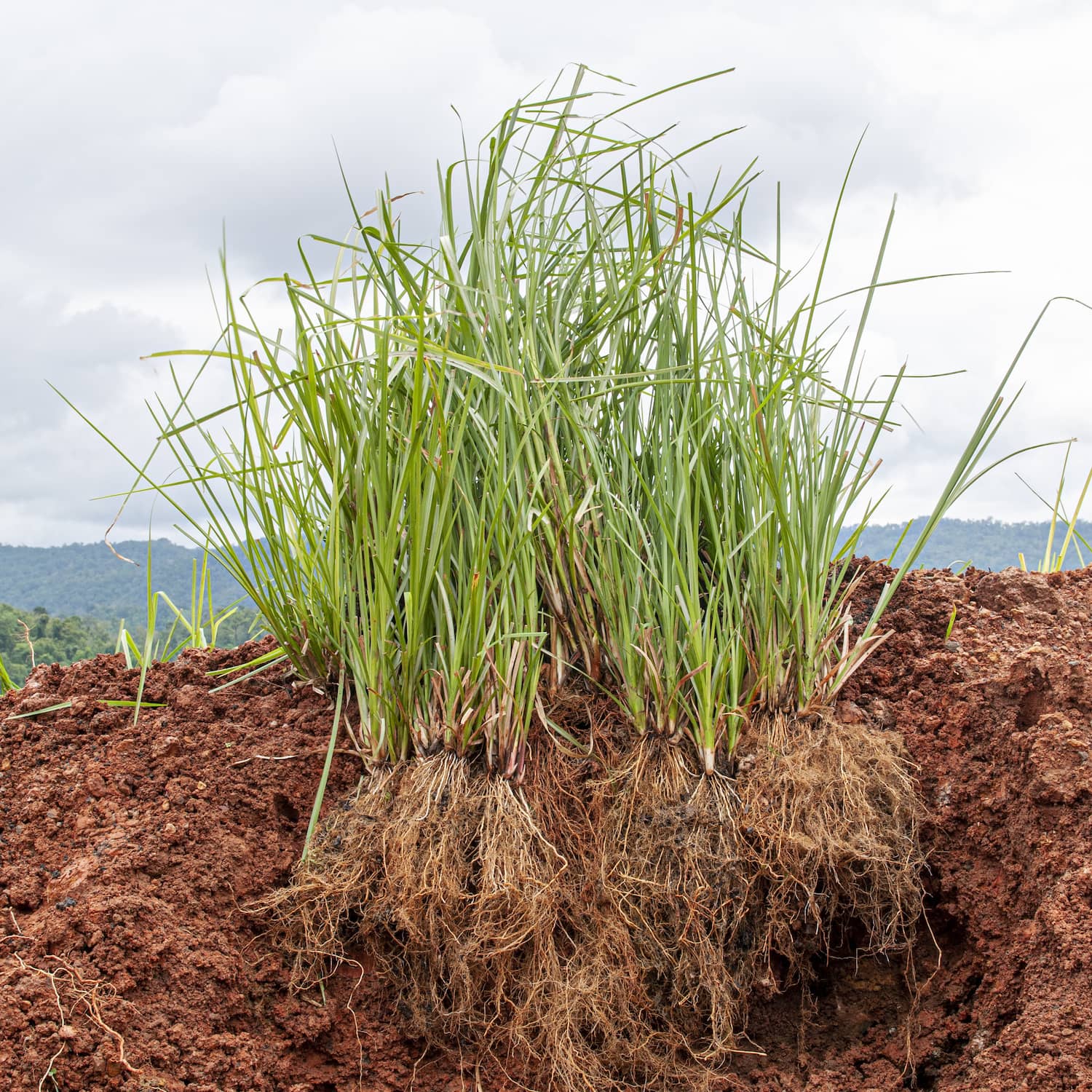
Above ground, vetiver can grow up to 3 meters tall, while its root system extends vertically to depths of up to 6 meters. These roots possess impressive tensile strength—approximately one-sixth that of mild steel—and, when planted in continuous hedgerows, can increase soil shear strength by up to 45%. Beneath each hedgerow, the interlocking and dense root structure forms underground “walls” that reinforce soil stability and help protect associated infrastructure.
Vetiver is highly adaptable to extreme environmental conditions. It can tolerate a wide pH range (from 3 to 11), survive temperatures between -15°C and +55°C, and is exceptionally drought-resistant. Remarkably, it can also withstand complete submergence in water for up to three months. Additionally, vetiver is tolerant of saline soils, most heavy metals, and all herbicides except glyphosate.
1. The Phyto-Vet™ Vetiver System is an extremely effective system for soil and water conservation, infrastructure stabilization, pollution control, wastewater treatment, mitigation and prevention of storm damage and many other applications. The Phyto-Vet™ Vetiver System has been specifically bred for maximum phyto-remediation potential. 2. Chrysopogon zizanioides is central to all Phyto-Vet™ Vetiver System-based bioengineering and conservation applications. Our grass is unique and can be used in the tropics and semi-tropics, as well as in areas outside these regions where summers are hot and winters are not permanently frozen, with soil conditions that are not permanently frozen. 3. Phyto-Vet™ Vetiver grass is sterile and has no weed potential. 4. Phyto-Vet™ Vetiver grass is an “ecological-climax” species. It outlasts its neighbours and seems to survive for decades, showing no aggressiveness or colonization ability. It withstands drought and high levels of flooding. 5. It is tolerant to high levels of pesticides and herbicides and also to a wide range of toxic and heavy metals. Temperature variation from -14ºC to 55 ºC, Soil pH from 3.0 to 11, High level of tolerance to soil salinity, sodicity and acid sulphate. 6. The roots of the grass have an average tensile strength of 75 MPa and improve the shear strength of soil by between 30 and 40%. Engineers liken them to a “Living Soil Nail”.
Extensive Root System
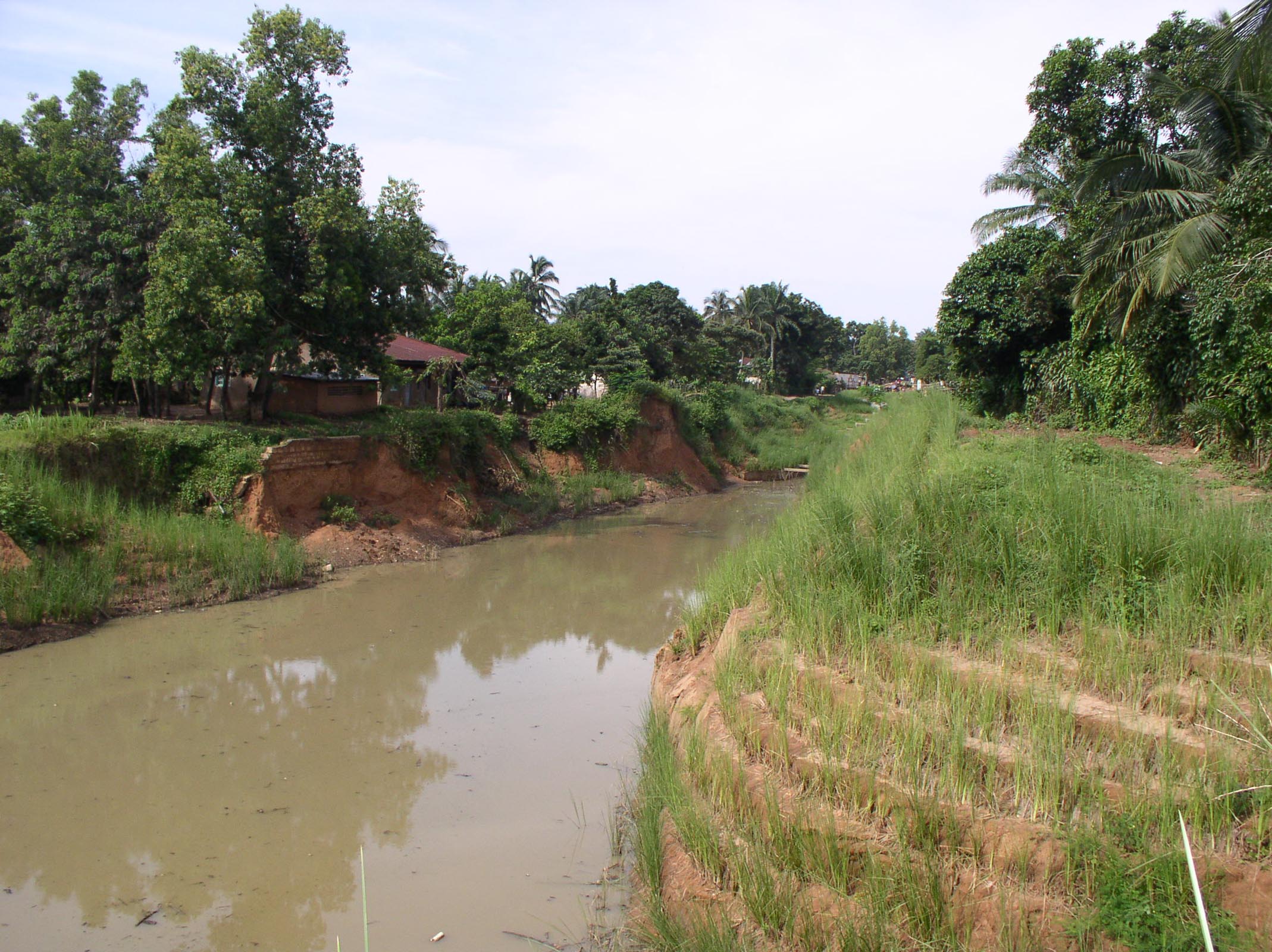
Our Phyto-Vet™ Vetiver Grass is produced and grown in-house and has been developed over many years. Our Phyto-Vet™ Vetiver Grass’s extensive root system makes it the ideal choice for civil infrastructure protection, riverbank stabilisation, passive wastewater treatment systems, and even vegetation establishment in hostile environments.
About Phyto-Vet™ Vetiver Grass
The Vetiver grass system is an extensively used system with a wide variety of applications, including erosion control, storm water management, phyto-remediation of dirty and effluent water, as well as the removal of heavy metals.
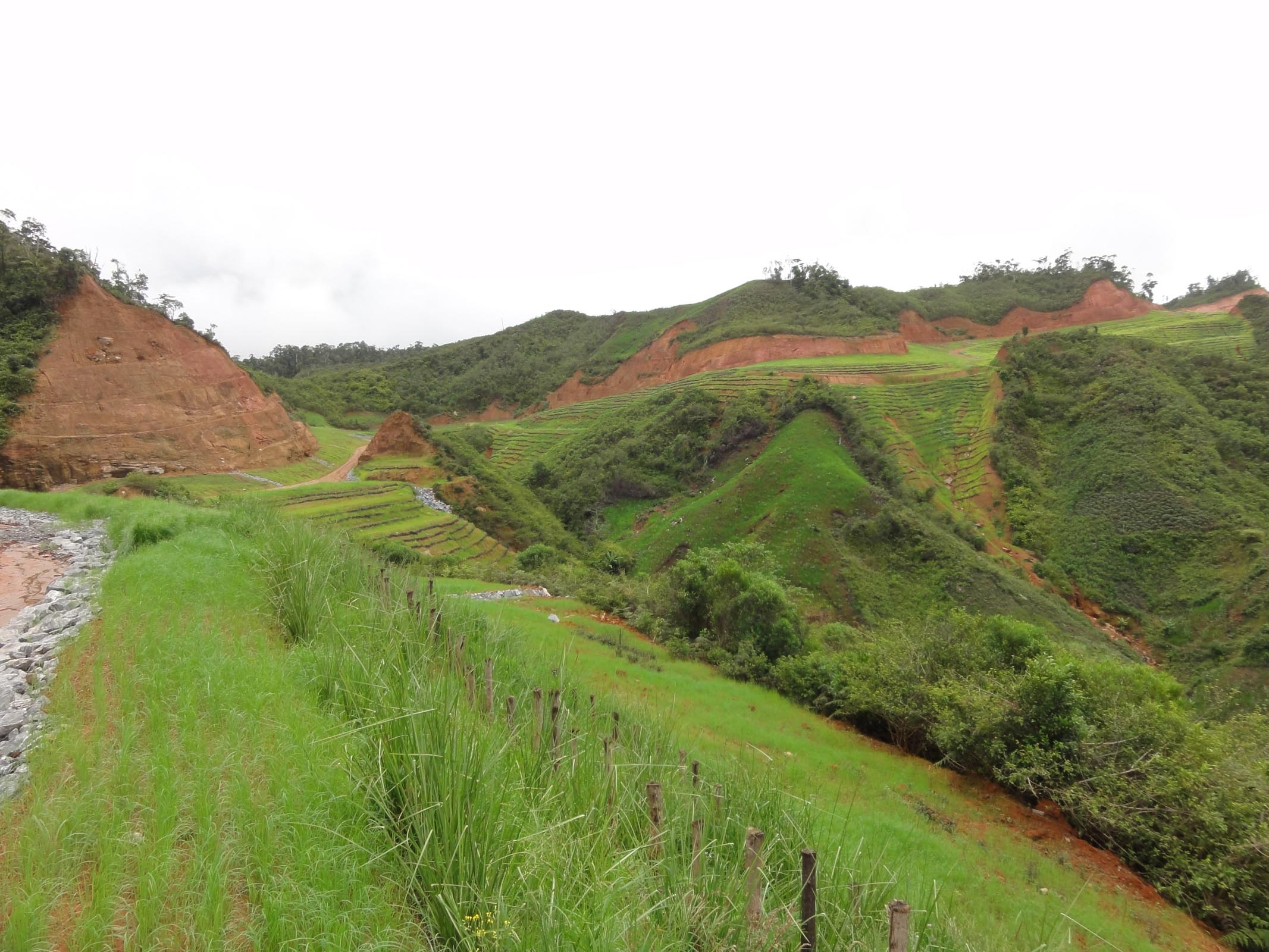
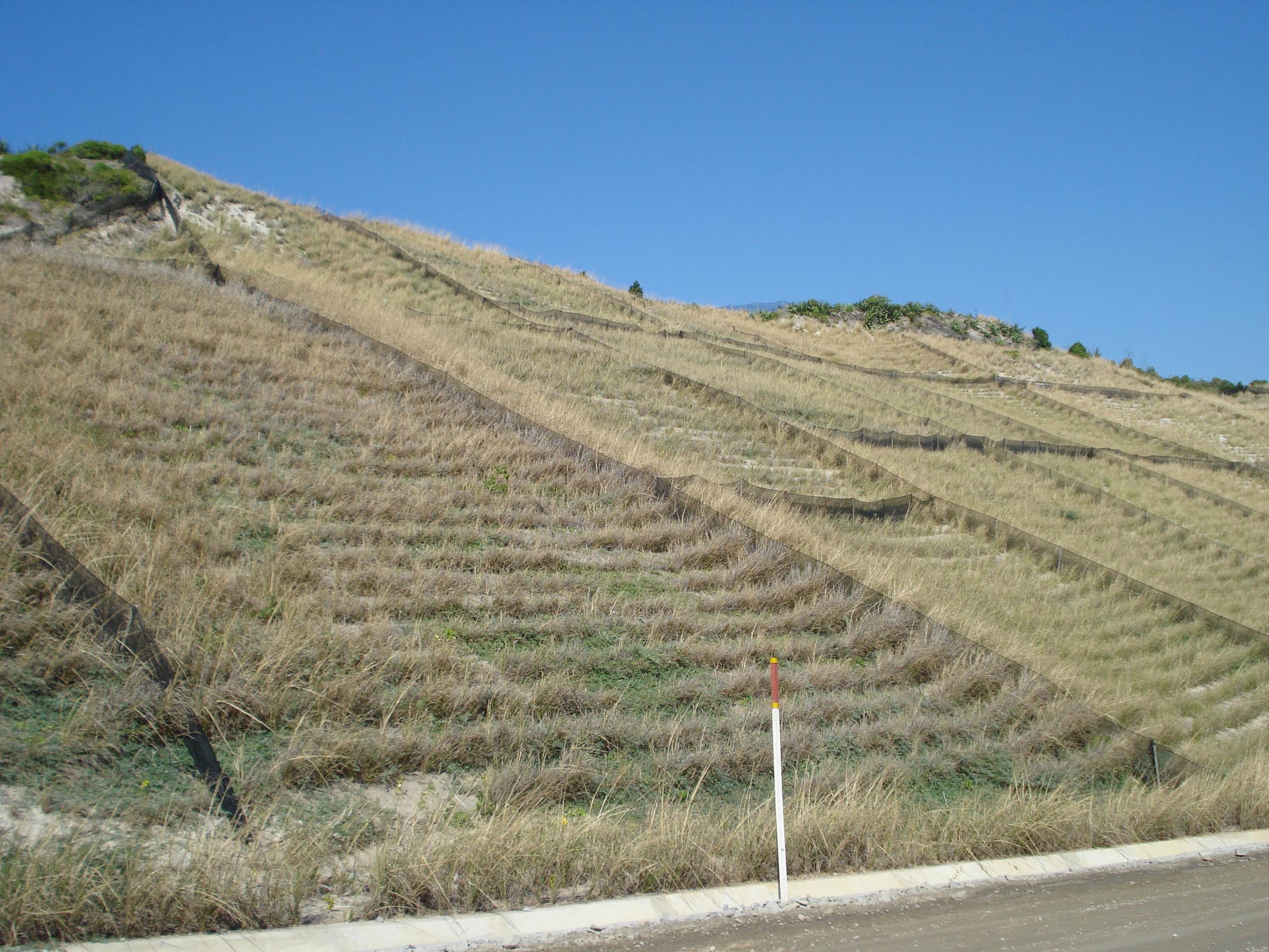
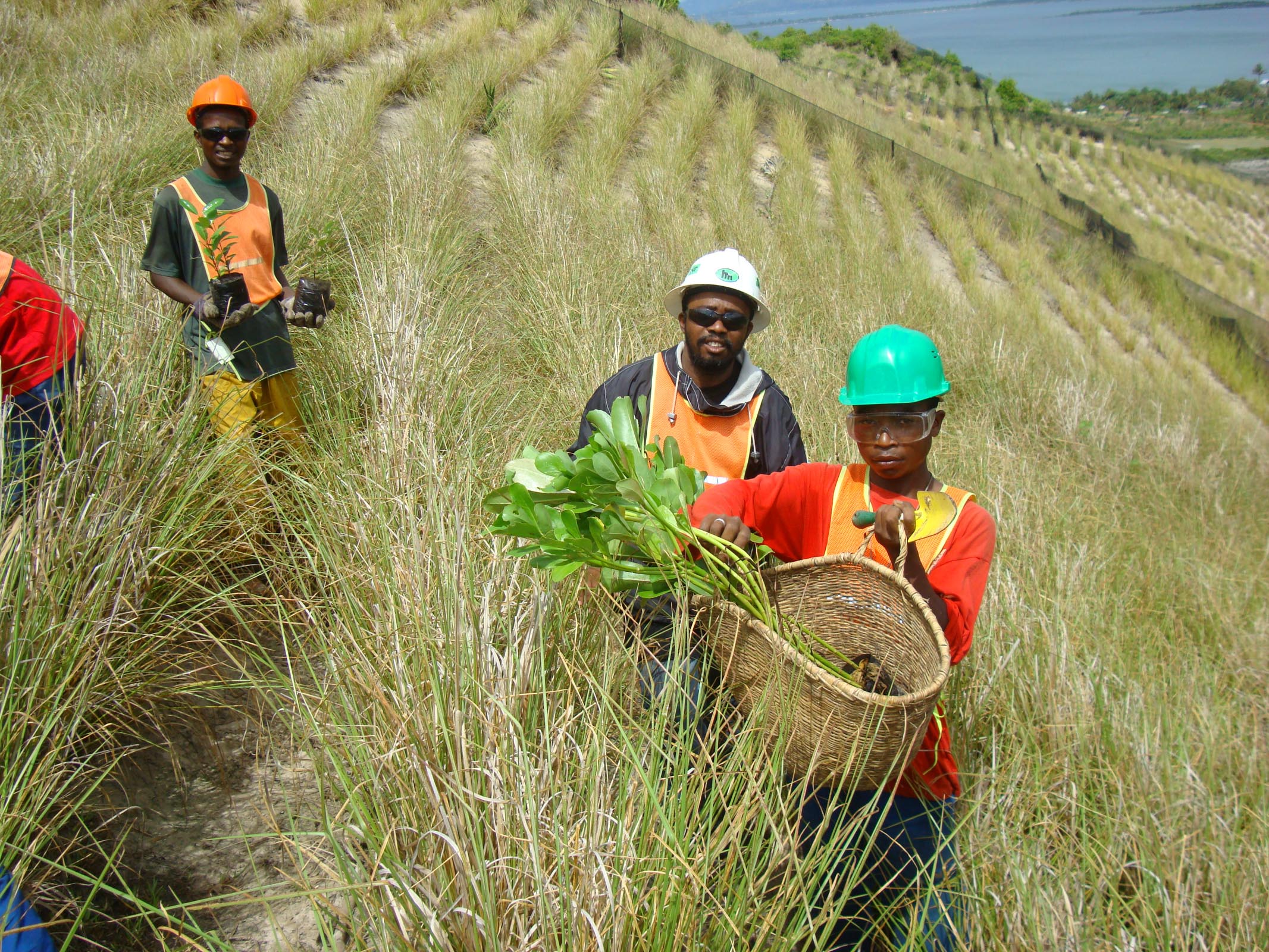
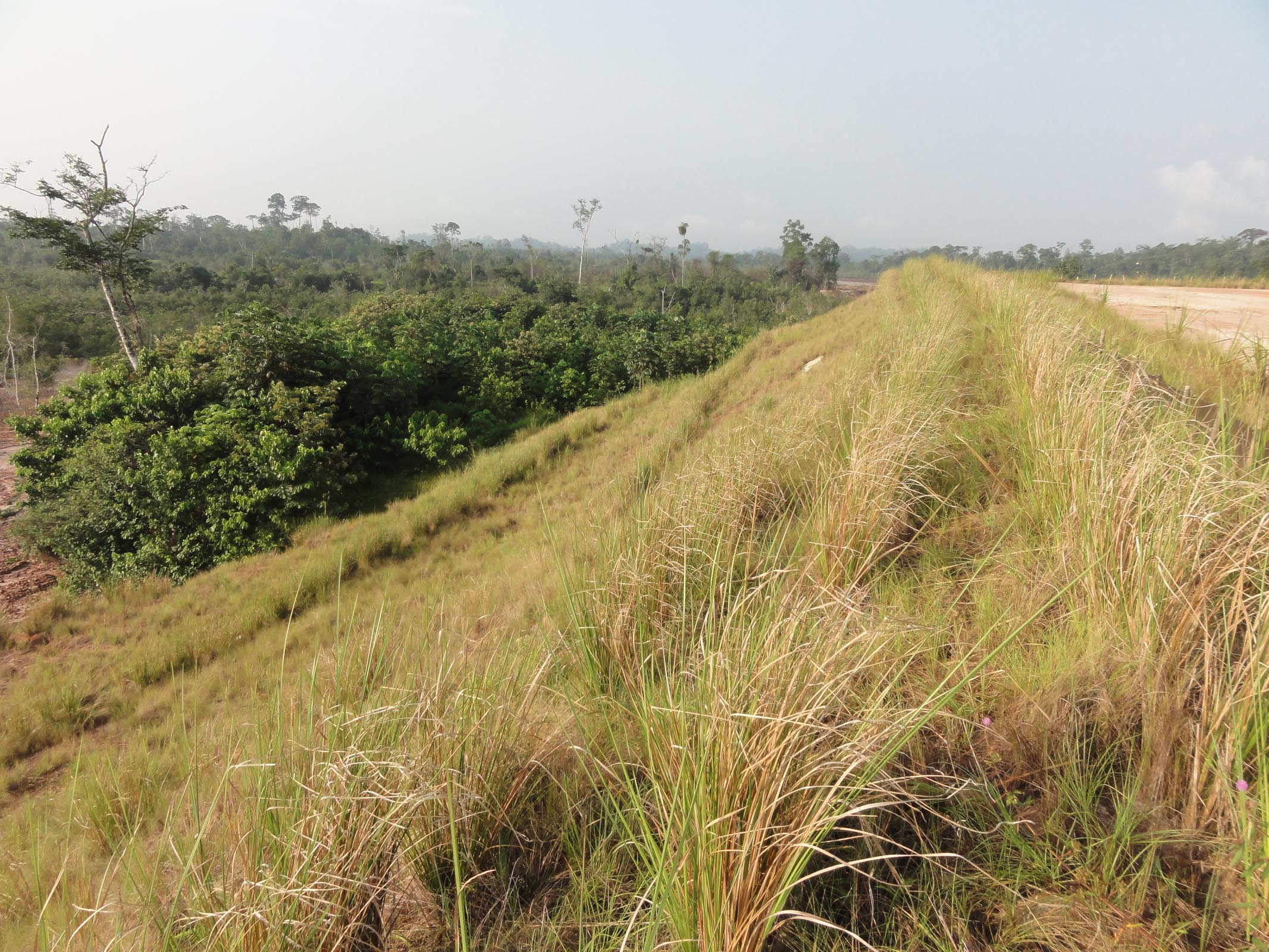
Phyto-Vet™ Vetiver grass is typically planted in horizontal rows with varying centers. Row spacing and plant centers are determined by the angle and erosion potential of the slope or area in question. Once the Phyto-Vet™ Vetiver grass has reached maturation, the above-ground continuous horizontal rows will trap sediment and minimize erosion by reducing flow velocity and the movement of soil particles, thereby artificially creating an environment that is more suitable for the establishment of natural vegetation. Decreased flow velocities will minimize the loss of soil and allow young emerging vegetation to establish. The root system will, in turn, deeply anchor the soil minimizing shear stress and assisting with slope stability.
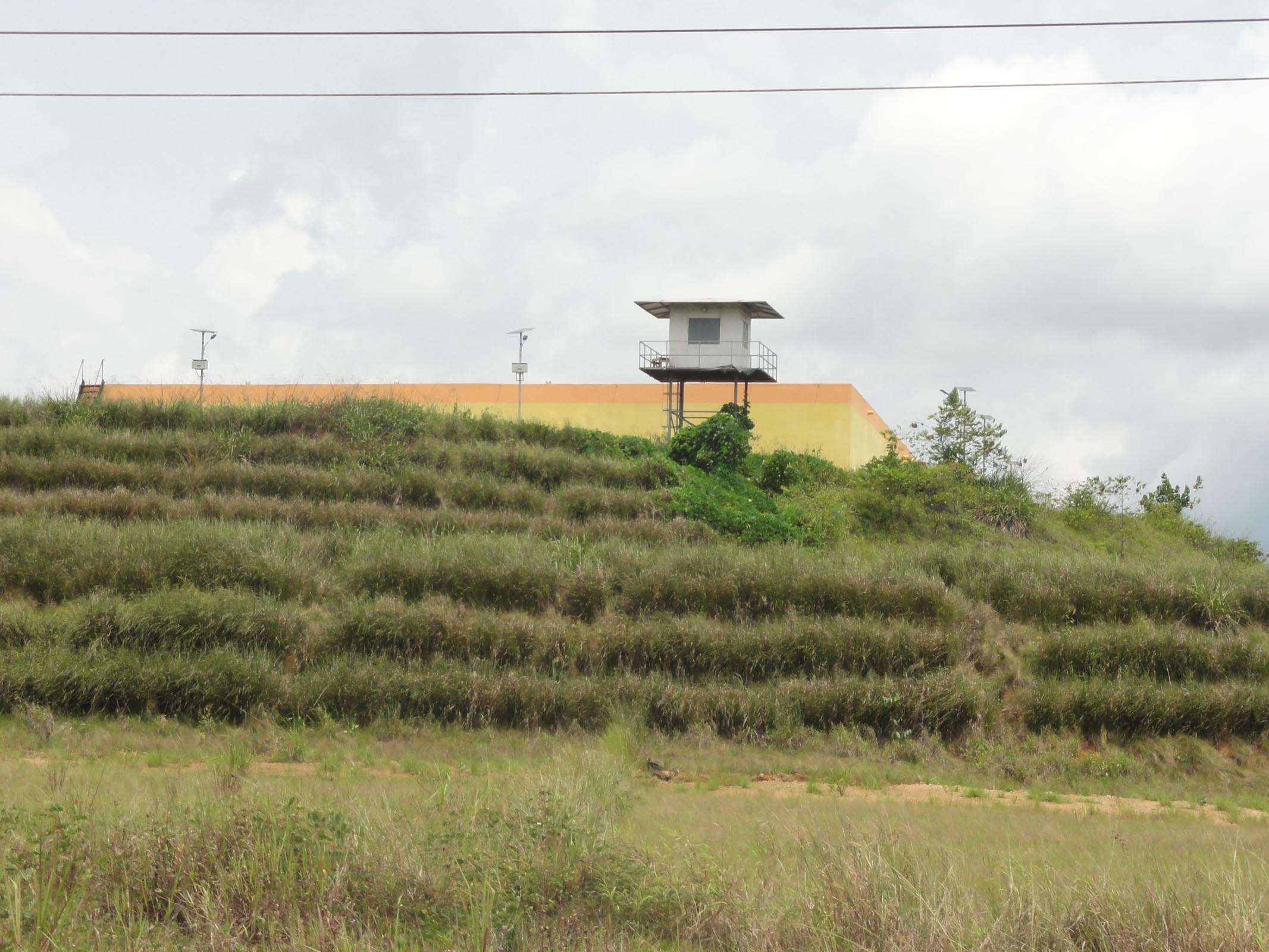
Phyto-Vet™ Vetiver grass is ideal for the establishment of vegetation on hostile tailings facilities where soil pH ranges from 3.5 to 9 and high levels of salinity, sulphates and sodicity exist. Once established the robust leaf structure is not affected by wind-blown sand particles and will minimize dust abatement.
Our Phyto-Vet™ Vetiver grass has been specifically developed to maximize its Phyto-remediation potential. Phyto-Vet™ Vetiver grass is mainly used for the denitrification of the treated effluent and the passive removal of elevated Nitrate and Phosphate levels in water sources. Phyto-Vet™ Vetiver grass is similarly used for the removal of soluble heavy metals and toxins. This is achieved through the construction and installation of Phyto-Vet™ Vetiver grass Floating islands, for open water bodies (effluent steeling ponds/pollution control dams, etc). Vetiver pontoons measuring 1m x 1m x 0.1m and containing 16 Vetiver plants are installed on the surface. This additional treatment capacity will be provided by utilizing the current water bodies to provide the necessary retention period according to the flow rates provided.

ECO
FRIENDLY
PRODUCTS
What We Sell
We sell either pre-grown, established Phyto-Vet™ Vetiver plants in CJV2 bags ±80mm diameter and roughly 3 months old, or slips (Individual stolons). Phyto-Vet™, when used as an erosion control tool, is normally planted in a linear metre and line spacing varies between 6-8 plants per linear metre for plants or 6-8 slips per linear metre for slips. Phyto-Vet™ vetiver slips do, however, require more maintenance (watering) than pots, and their survival rate is lower.